

The 3 stages of retirement and how to plan your income around them
Written: 21 August 2026. Last Updated: 27 August 2026.
Key takeaways:
- Your spending habits are likely to evolve throughout retirement.
- You might spend more in the early years, less in mid-retirement, and more on healthcare later in life.
- The Retirement Living Standards are a useful starting point for calculating your likely costs in each stage of retirement.
- Cashflow modelling can help you project your income against your costs, stress-testing different decisions to plan a sustainable retirement income.
When you retire, you want to feel confident that your pensions, savings, and other income will last the rest of your life.
But planning a retirement income isn’t always straightforward. On one hand, you don’t want to limit your lifestyle unnecessarily. On the other, you don’t want to overspend and risk running out of money.
Your lifestyle and spending habits are likely to evolve throughout your retirement. So, a “sustainable income” doesn’t necessarily equal a “consistent income”.
Read on to learn about the three main stages of retirement and how they can help you plan a sustainable income.
1. The go-go years: Your action-packed early retirement
In the early years of your retirement, you may find you spend more as you enjoy freedom from work while in good health.
You might want to:
- Travel the world, enjoying holidays and ticking activities off your bucket list
- Socialise with loved ones, spending on theatre shows, day trips, and meals out
- Enjoy your hobbies, whether that’s spending more time on existing ones or trying something new.
As a result, you may need to draw more from your retirement fund in the first decade. Naturally, this will vary depending on your plans and goals for early retirement.
2. The go-slow years: Spending slows down as you get older
As you progress through retirement, you may find yourself cutting back on things like travel, socialising, and hobbies.
In some cases, this can be due to your health and mobility becoming more limiting. In others, you might just feel ready to enjoy a slower pace of life.
You might plan for your income to dip slightly around ages 75 to 85, but this varies from person to person.
3. The no-go years: Healthcare costs may rise later in life
Later in life, many people find their costs rise again, this time to accommodate their changing healthcare needs.
In the UK, elderly care is means-tested. The assessment looks at your capital and income to determine which of the following three categories you fall into:
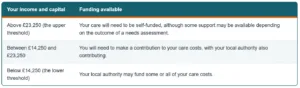
In July 2026, Carehome.co.uk reported that residential care in the South East costs an average of £1,446 a week, or £1,721 if you require dementia nursing care.
At-home care can also be costly, with Age UK suggesting homecare typically costs approximately £25 an hour, depending on your needs and circumstances.
Without having cash available to cover the cost, you may find you have to sell assets – such as your home – to fund your healthcare.
Learn more about later-life planning by downloading our free guide.
By factoring your potential future healthcare needs into your retirement plan, you might be able to keep funds set aside to cover your expenses without losing key assets you had hoped to pass on to the next generation.
Of course, you may find you never end up needing care. But by having enough wealth available to cover the cost, you can be ready to pay the bills if needed or prepare to pass your wealth on if not.
How much will it cost me to retire?
There’s no one-size-fits-all budget for retirement.
That said, the Pensions UK Retirement Living Standards offer a helpful starting point for thinking about your expenses.
In 2026, a comfortable retirement is estimated to cost a single retiree £45,400 a year or £62,700 for a couple. For a couple, the estimate includes expenses such as:
- One fortnight-long Mediterranean holiday a year
- Three long weekend breaks in the UK
- £56 a week per person for activities
- £1,269 a year per person for clothing and footwear.
While these estimates can be a useful starting point for planning your retirement income, it may be unwise to rely on them too heavily. These figures don’t account for your own preferences, the impact of inflation, or one-off large expenses you might incur during retirement.
You might, however, use them as a springboard for planning your own ideal lifestyle at each stage of retirement. For example, you might wish to spend more on holidays, less on clothing, or factor in big life goals.
With a clear view of your expected costs, you can begin planning a sustainable income to support your ideal retirement.
Cashflow modelling could help you retire on your own terms
At Fiducia, we use cashflow modelling to support our clients in planning an income that supports their lifestyle goals and remains sustainable throughout retirement.
Cashflow modelling is an effective tool for projecting your future costs against your income. It enables you to:
- Experiment with different variables
- Stress-test key life events
- Visualise how they could impact your finances in both the short and long term.
Can I retire with £350,000 in investments and pensions? How cashflow planning can help
This can give you the peace of mind you need to enjoy your retirement without worrying about running out of money later in life. So, you could indulge without overspending and make the most of your hard-earned pension.
Learn more about transitioning to retirement.
Work with us at Fiducia Wealth Management
If you’d like to find out more about how Fiducia could support you in planning a sustainable retirement income using cashflow modelling, get in touch.
Email us at email@fiduciawealth.co.uk or call us on 01206 321 045 to find out how we could support you.
Want to find out more about working with Fiducia? Discover why over 90% of our clients would recommend us to family and friends.
Please note
This article is for general information only and does not constitute advice. The information is aimed at individuals only.
All information is correct at the time of writing and is subject to change in the future.
The Financial Conduct Authority does not regulate cashflow planning.
A pension is a long-term investment not normally accessible until 55 (57 from April 2028). The fund value may fluctuate and can go down, which would have an impact on the level of pension benefits available. Past performance is not a reliable indicator of future performance.
The tax implications of pension withdrawals will be based on your individual circumstances. Thresholds, percentage rates, and tax legislation may change in subsequent Finance Acts.