

How much does financial planning in Essex cost?
Written 25 August 2026. Last Updated 26 August 2026
Key takeaways:
- The cost of financial advice in Essex varies depending on the firm and what the client needs.
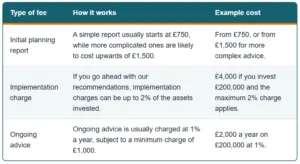
- Initial planning reports can start from £750 for a very simple case.
- More complicated reports are likely to cost from £1,500.
- Implementation charges can be up to 2% of the assets being invested.
- Ongoing advice could be charged at 1% a year, subject to a £1,000 minimum.
- Fiducia Wealth Management’s initial discovery meeting is without cost or obligation.
If you’re searching for financial advice in Essex, there’s a good chance that cost is one of the first questions that comes to mind.
The price can range from hundreds of pounds for a simple report to thousands if you need advice and ongoing support.
Fiducia Wealth Management fees explained
At Fiducia Wealth Management, your first discovery meeting is without cost or obligation. The table below shows how much you could pay after this meeting.
Read our full fees page here.
Below, you can find out how fees for financial planning work on a broader scale, why costs can vary, and what you may receive in return.
How do financial advice fees work?
When you pay for advice, your adviser must charge a fee rather than receive commission from providers.
The Financial Conduct Authority (FCA) states that advisers must provide clients with a clear charging structure and explain charges upfront, in writing, before offering advice. They must also agree and disclose the potential total charges as soon as they know them.
This fee might be a:
- Fixed cost
- Hourly rate
- Percentage of the money being invested
- Combination of these.
The table below uses MoneyHelper data to show the typical cost of advice.
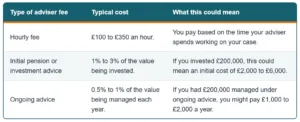
Now that you know the average cost of advice, you can compare fees between firms.
For instance, our implementation charge of 2% sits within the typical 1% to 3% range for initial pension or investment advice.
At Fiducia, fees are calculated based on the time spent working for you and the level of advice required. We confirm any chargeable work in writing before proceeding.
Why do financial advice costs vary?
It’s vital to remember that financial advice isn’t a “one-size-fits-all” service. The cost will depend on your circumstances, future goals, and the amount of work involved.
Example 1: You want to consolidate your workplace pensions
In this situation, the adviser might talk through the risks and benefits of consolidation and help you come to a decision about whether it’s right for you. After the work is done, you might not re-engage with that adviser or require ongoing advice.
Read more: When should I take my tax-free pension lump sum?
Example 2: You want to benefit from ongoing guidance and help with managing your money
There are some circumstances that mean your adviser will need to spend more time analysing your finances, including:
- Working out when you can afford to retire
- Drawing a sustainable income from your investment portfolio
- Reducing your family’s Inheritance Tax bill
- Passing wealth on to children or grandchildren
- Funding later-life care.
So, a more complex plan might require more research and calculations.
In this example, we wouldn’t consider the advice as a transaction, but as an ongoing relationship. The cost is based on the expertise and planning required to help you make sound long-term decisions.
Is financial advice worth the money?
It really depends on the outcome you are looking for. In our opinion, ongoing financial advice is very useful for those who want to truly make the most of their finances.
Here are three key things to remember when you’re searching for financial advice in Essex.
1. Firms can only take an ongoing charge if they continue to provide a service
Firms can typically only take an ongoing charge if they continue to provide a service, such as regularly reviewing the performance of your investments.
If there is an ongoing charge, a firm must confirm:
- What is included in the service
- The charges involved
- How you can terminate the arrangement.
In a 2025 review, the FCA said around 80% of revenue from adviser charges was thanks to ongoing services from around 4 million clients.
This shows why it’s so important to understand exactly what your ongoing fee covers.
2. Ongoing advice can be useful if your finances are complex
Ongoing advice could be helpful if your circumstances are likely to change or if you want regular support with important financial decisions.
For instance, you may benefit if:
- You’ve received an inheritance and want to use it wisely
- You’re worried about paying too much tax
- You’re interested in investing but don’t know where to start
- You’re approaching retirement and need to plan your income
- You have sold a business
- You want to ensure your estate is organised for loved ones.
In these scenarios, ongoing advice can help you keep your plan up to date, understand the options available to you, and make decisions with confidence.
3. A good financial planner will explain each step carefully, without pressuring you into a decision
Once your strategy with Fiducia is in place, we schedule regular reviews to ensure it is still relevant to you.
We also continue to provide expertise on an ongoing basis to help you stay on track to meet your long-term objectives.
For example, you may need to update your plan if you retire earlier than expected, receive an inheritance, or decide to help loved ones.
Most importantly, we will never pressure you into a decision you’re not comfortable with.
Get Chartered financial advice in Essex with Fiducia Wealth Management
Perhaps the best way to understand the cost of financial advice is to discuss your own circumstances with an adviser.
Your initial discovery meeting with Fiducia is at no cost and carries no obligation. During this meeting, you can explain what you want to achieve, ask questions, and decide whether our service is right for you.
If you do then choose to go ahead, we will confirm any fees in writing before carrying out any chargeable work.
If you’d like to find out more about the cost of financial advice in Essex, please get in touch.
Email us at email@fiduciawealth.co.uk or call us on 01206 321 045 to find out how we could support you.
Please note
This article is for general information only and does not constitute advice. The information is aimed at individuals only.
All information is correct at the time of writing and is subject to change in the future.
Please do not act based on anything you might read in this article. All contents are based on our understanding of HMRC legislation, which is subject to change.
A pension is a long-term investment not normally accessible until 55 (57 from April 2028). The fund value may fluctuate and can go down, which would have an impact on the level of pension benefits available. Past performance is not a reliable indicator of future performance.
The tax implications of pension withdrawals will be based on your individual circumstances. Thresholds, percentage rates, and tax legislation may change in subsequent Finance Acts.
The value of your investments (and any income from them) can go down as well as up and you may not get back the full amount you invested. Past performance is not a reliable indicator of future performance.
Investments should be considered over the longer term and should fit in with your overall attitude to risk and financial circumstances.